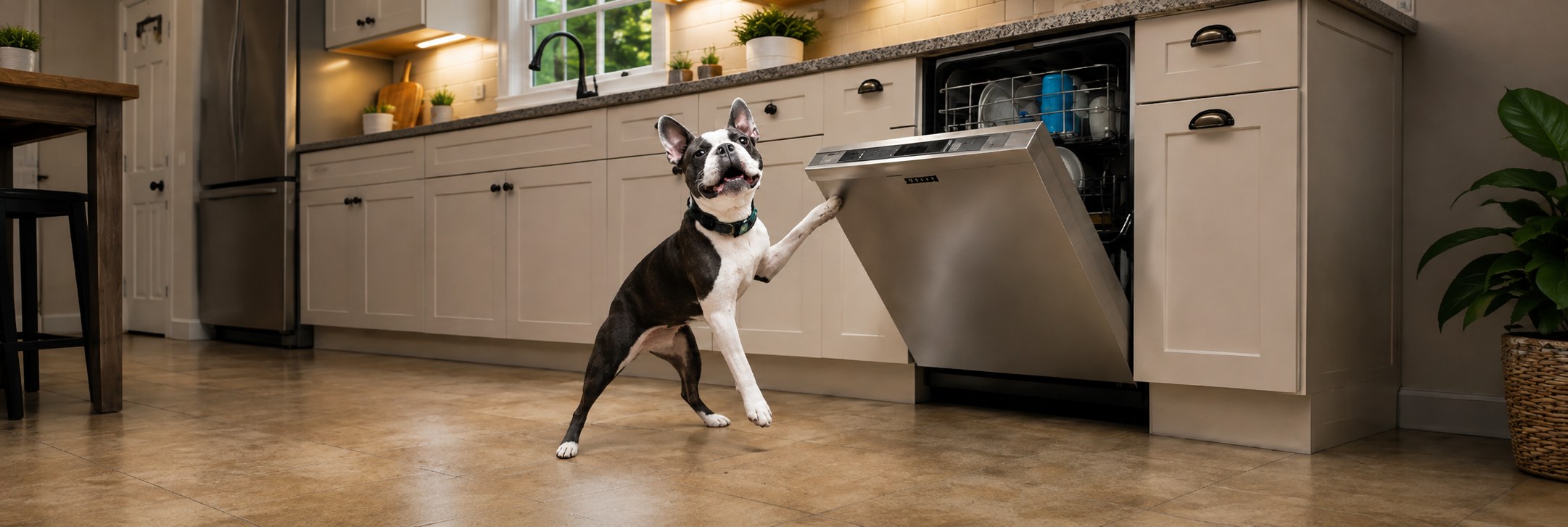

We've all had moments in our parenting lives where we didn't act like the parent we want to be.
Maybe we yelled. Maybe we threw the dish towel. Maybe we slammed a dishwasher shut. Who knows what it is for you. We let the frustration get the better of us. We let it do the talking. We let it run the show.
The emotion comes in hot and heavy, and we step aside and let it take control for a second. Go ahead, have at it. I'll be back in a minute.
And then afterwards you notice a family member looking at you like you have two heads. Eek.
You inject anger-energy into the room, and maybe your child picks it up. Bam! Now it's spreading and you need to deal with that too.
So why does this happen?
Let's back up a little and talk about emotions. There's a reason we have emotions. One of the things they do is tell us what to do. Every emotion comes with an action urge attached.
Anger may urge us to yell or fight.
Fear urges us to avoid or run.
Embarrassment urges us to hide.
The emotion is paired with a little "to do" urge.
People don't talk about this, but in the moment, it feels good - even right - to follow the urge. If the emotion urges a dishwasher slam and you do it, it's satisfying: Ahh, fuck it all!
The problem is afterwards - ugh - when it doesn't feel so good, or right, anymore.
So what do we do?
How do we not slam the dishwasher? How do we not follow an action urge?
We pause.
It takes work to create a pause between an emotion and an action. They can feel so tightly connected and almost instant! So how?
The first task is training your attention muscles to notice what's happening early in the process. It's a lot easier to pause before the urge is at full strength. Catch the wave while it's still building, not once it's breaking over you.

Noticing is a start but it's not enough. Now you have the ability to notice yourself as you're losing it. Yay.
You also need to know WHAT to do instead and have the CAPACITY to actually do it. These are not the same! I could read a book on how to swing a golf club and know exactly how to swing a golf club. Maybe I could even pass a written test on how to swing a golf club. That doesn't mean I can stand at the tee and hit the ball. It doesn't mean I have the capacity.
So the pause is like this: Damn, I am pissed off. I want to slam this dishwasher. And instead, I'm going to do the thing I've practiced repeatedly - the exact opposite. I'm going to close it as softly as I can.
That one's easy to picture. Here's a harder one. My kid is having a meltdown and it's ugly. I want to scream at him. Instead, I'm going to breathe, speak slowly, move slowly. I practiced this when the stakes were low and I'm calling on it now.
Simple, but not so easy.
Here's where you start.
The next time you feel it coming, just say it in your head: "I'm noticing a lump in my throat." "I'm noticing the urge to yell."
That's it. Don't try to stop yourself yet. Don't try to fix anything. Just name it while it's happening. Build the noticing muscle.
You can't choose to do something different if you don't notice in time.